Explore the guide library · Wired connection help
Trace the laptop, adapter, cable and switch port to find the component limiting the local connection.
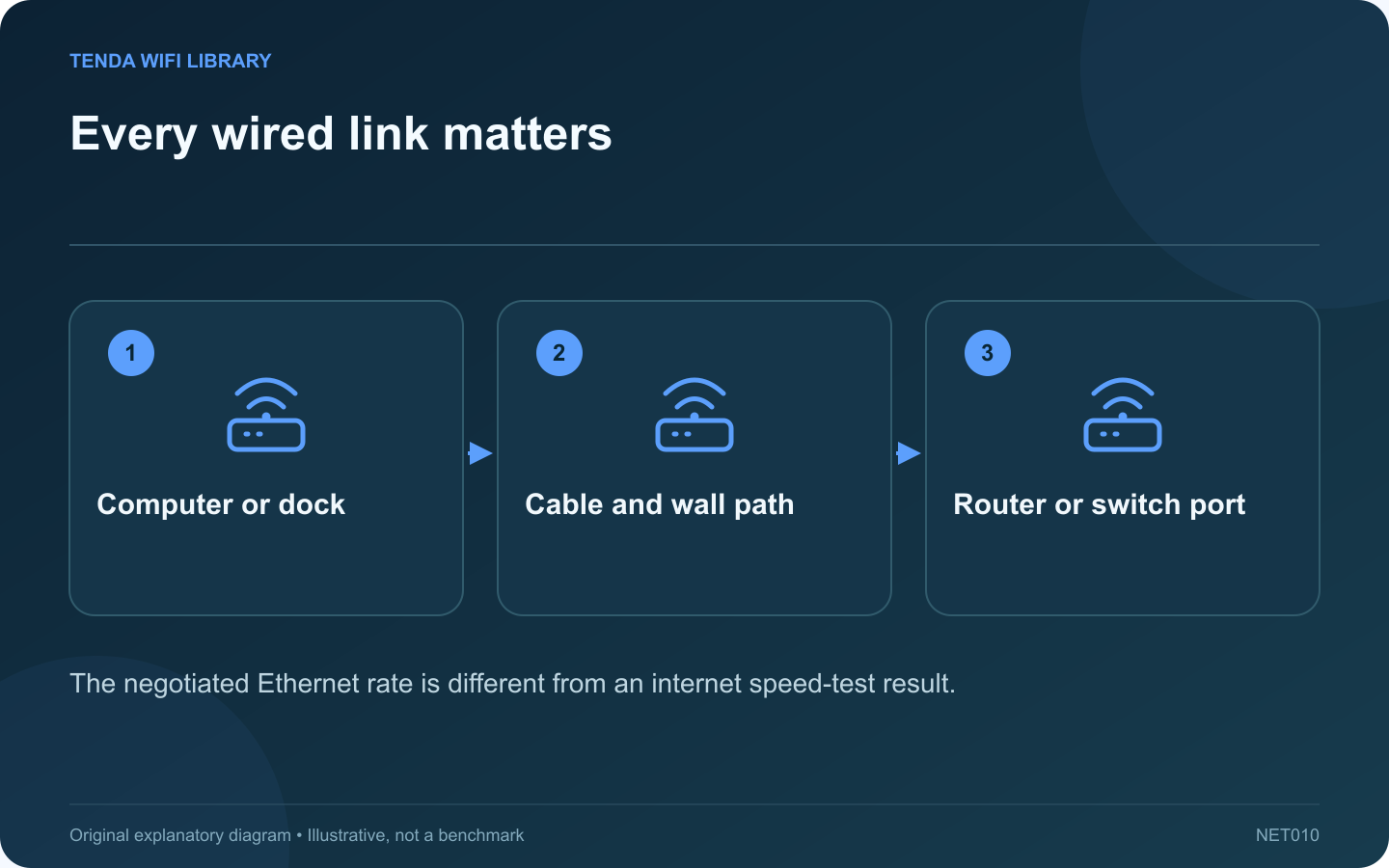
If Windows reports a 100 Mbps Ethernet connection when you expect gigabit or faster, inspect the local wired path first. An internet speed test cannot make that local link negotiate at a higher rate.
Record the actual interface
Identify whether Ethernet comes from the computer, a USB adapter or a dock. Check its documented rate and the far-end router or switch port. Some equipment has mixed-rate interfaces, so the fastest specification on the box may not describe the socket in use.
Map the complete path
List the patch cable, wall socket, in-wall run, intermediate switch and final port. A fault or limitation anywhere along the relevant link can affect negotiation. Microsoft’s Ethernet troubleshooting guidance starts with checking the connection and comparing another cable or device.
Use a short isolation test
- Connect the computer directly to a known-compatible port using a known-good short cable.
- Inspect the negotiated rate again.
- If it improves, reintroduce the original path one component at a time.
- If it does not, compare the adapter and far-end port with another compatible device.
Avoid forcing a rate prematurely
Leave normal supported negotiation settings in place unless the manufacturer or administrator identifies a specific requirement. Forcing a speed can hide a cabling problem or produce an incompatible duplex arrangement.
Test performance after the link is correct
Once the expected local rate appears, test a suitable local transfer or internet connection according to the actual goal. Storage, USB bandwidth, service capacity and other traffic can still limit throughput below the negotiated rate.
Label the cable or port that failed the comparison and replace or repair it appropriately. A clear component test is more useful than buying a new router because one desk connection remained at an older Ethernet rate.
Sources and editorial notes
Sources checked 8–9 October 2026. Independent guidance and original illustrations; product comparisons use published specifications rather than hands-on benchmarks. Check the exact model, revision and regional documentation before changing settings.