Explore the guide library · Performance testing
Use test options deliberately instead of increasing streams until the result looks impressive.
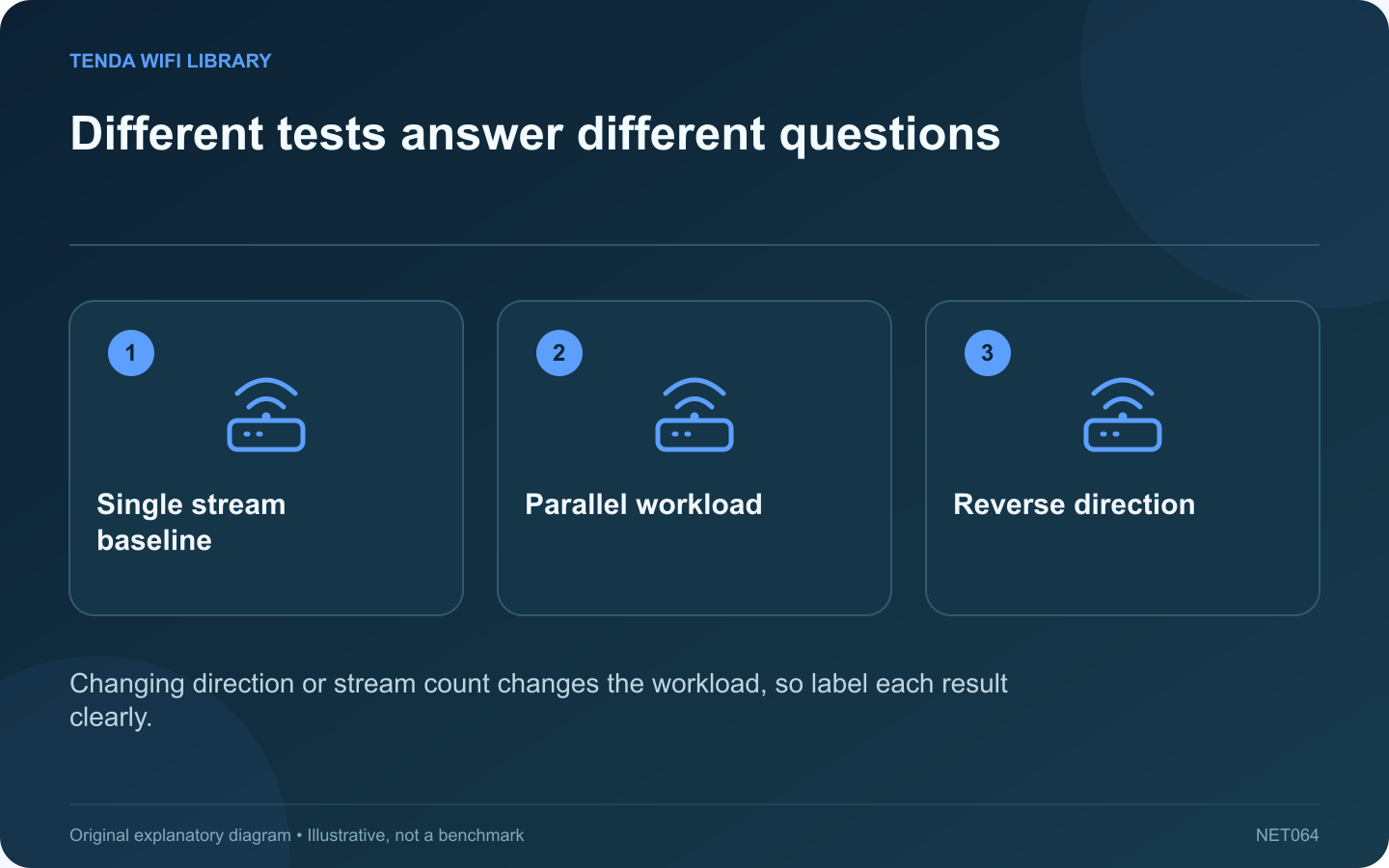
Two iperf3 results can differ greatly because they used different options. A single stream, several parallel streams and a reverse-direction test are different workloads. Label the configuration before comparing numbers or declaring one router faster than another.
Keep a simple baseline
Begin with the ordinary client-to-server test between authorized local computers. Record duration, software version and connection type. Avoid introducing several performance flags before establishing a repeatable baseline that resembles the task you want to improve.
Use reverse mode for direction
ESnet documents -R to make the server send data to the client. This is useful when receive and transmit behavior differ. Keep the same endpoints and location so the change in direction remains interpretable.
Use parallel streams for a specific reason
The -P option sets the number of parallel streams. Multiple streams can exercise the path differently and, with supported versions, distribute work across threads. A higher result does not mean a single ordinary file transfer will automatically achieve that rate.
Compare a small test matrix
| Test | Record |
|---|---|
| Ordinary single stream | Baseline throughput and stability |
| Reverse single stream | Direction-dependent difference |
| Deliberate parallel test | Stream count and endpoint load |
Watch the endpoints
Inspect whether either computer reaches a processing limit. A test utility cannot exceed a bottleneck in the host or its network interface. Keep the server private and stop it after the comparison.
Report the range across repeated runs and explain which workload matters to the user. Choosing only the largest parallel-stream result can conceal poor single-transfer behavior or an unstable connection. A useful test plan identifies why the measurements differ and links the relevant result to a real application, rather than turning every available option into a contest for the largest number.
Sources and editorial notes
Sources checked 8–9 October 2026. Independent guidance and original illustrations; product comparisons use published specifications rather than hands-on benchmarks. Check the exact model, revision and regional documentation before changing settings.