Independent router help & how-tosHelping you find your connection.
The guide library

Windows proxy or PAC settings: diagnose a browser connection problem safely

Explore the guide library · Browser and DNS help

Check whether the computer expects an intermediary before changing DNS or resetting the home router.
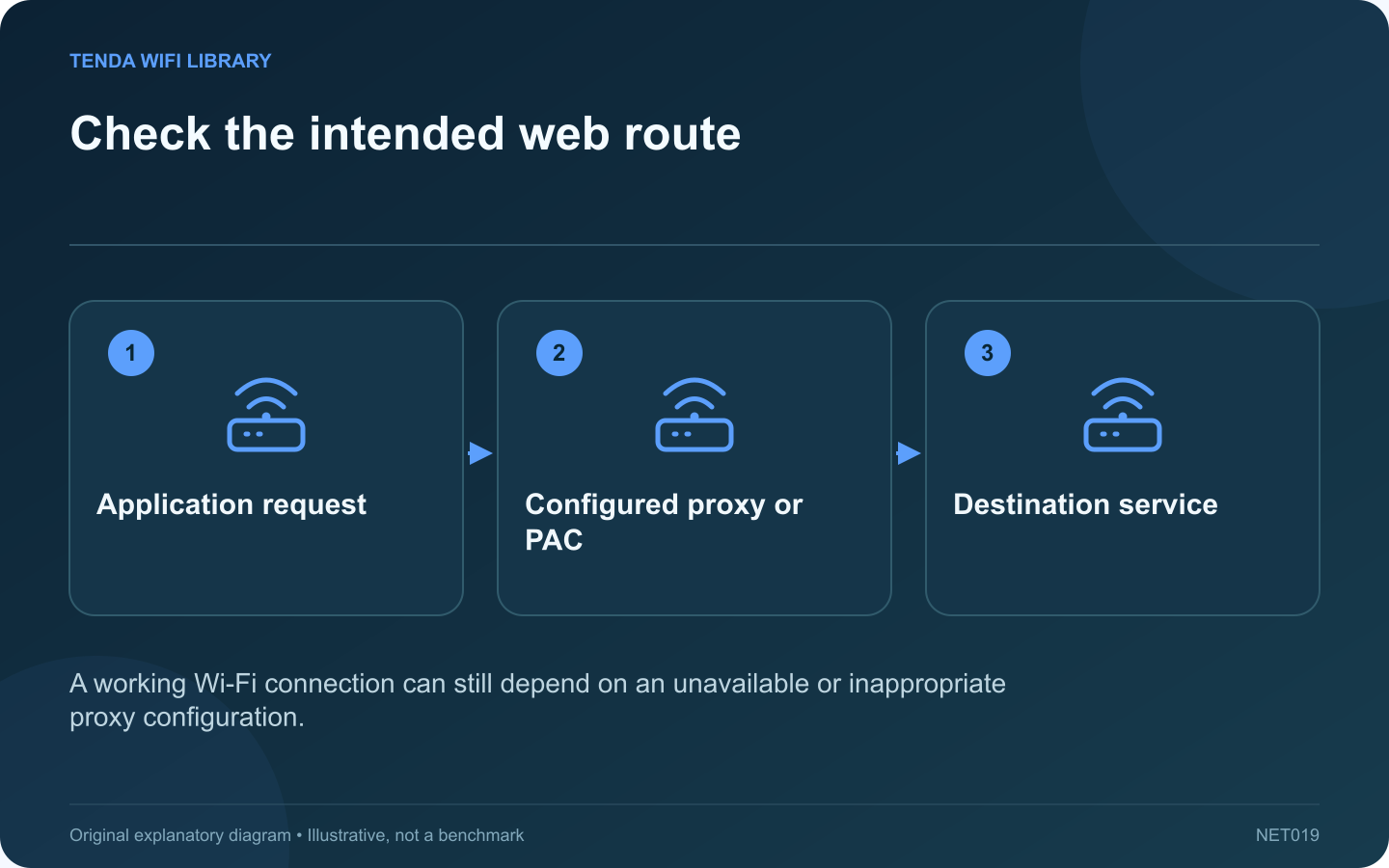
Check the intended web route: Application request; Configured proxy or PAC; Destination service
A working Wi-Fi connection can still depend on an unavailable or inappropriate proxy configuration.

A computer can connect to Wi-Fi normally while web requests fail because its proxy configuration is unsuitable for the current network. A proxy is an intermediary for selected traffic, and an automatic configuration script can decide when that intermediary should be used.

Record the visible error

Note whether the browser mentions a proxy, tunnel or configuration script. Compare an unrelated application and another device on the same router. If other devices work, that supports investigating the affected computer before changing shared router settings.

Inspect the configured method

In Windows Settings, open Network & internet and Proxy. Microsoft distinguishes automatic detection, a setup script and manual configuration. Record which method is active without copying private script addresses into a public support post.

Respect managed configuration

A work computer may intentionally require an organization proxy or an approved VPN. Do not disable those controls to get around a restriction. Ask the administrator whether the present network and VPN state match the expected access path.

Handle a personal-device mistake narrowly

If you knowingly entered an obsolete proxy on your own device, compare the setting with the service’s official instructions and correct only that configuration. Preserve the original details privately so the change can be reversed if it was still required for another task.

Check application-specific behavior

  • Some applications have their own proxy settings.
  • A VPN connection can have separate proxy configuration.
  • A browser extension may alter how certain requests are handled.
  • A working ordinary site does not prove every internal service is reachable.

After the justified change, retry the same failing destination and a second normal destination. Keep security software active. If a proxy setting returns unexpectedly, investigate the application or management policy restoring it rather than repeatedly resetting the router. The goal is to restore the intended route with a configuration you understand.

Sources and editorial notes

Sources checked 8–9 October 2026. Independent guidance and original illustrations; product comparisons use published specifications rather than hands-on benchmarks. Check the exact model, revision and regional documentation before changing settings.

Related guides

300 FAQs across our guide libraries

Quick answers

100 practical questions from Tenda WiFi Library.

Browse all 100 FAQs
How can proxy or PAC settings affect browser connectivity?

A computer can connect to Wi-Fi normally while web requests fail because its proxy configuration is unsuitable for the current network. A proxy is an intermediary for selected traffic, and an automatic configuration script can decide when that intermediary should be used. Note whether the browser mentions a proxy, tunnel or configuration script. Compare an unrelated application and another device on the same router. If other devices work, that supports investigating the affected computer before changing shared router settings.

Read the full guide and sources
Why can Firefox Max Protection stop DNS fallback?

Firefox can stop a page from loading when its selected secure DNS resolver is unavailable. Under Max Protection, that behavior can be intentional. It is different from the Wi-Fi adapter failing to connect or the entire household losing internet access. Record whether Firefox reports a resolver connection problem or a missing address for the requested name. Check the exact hostname. Do not interpret every browser warning as a password or router signal issue.

Read the full guide and sources
Could an incorrect Mac clock cause website certificate errors?

If several secure websites suddenly report certificate problems on one Mac, inspect its date and time before changing router settings. Certificate validity depends partly on time. A substantially incorrect clock can make otherwise valid certificates appear outside their allowed period. Note the browser's exact message and whether the failure affects one site or many unrelated sites. Compare another device using the same network. Avoid entering credentials or payment details into a page while its identity cannot be verified.

Read the full guide and sources
Can saved website data cause a sign-in loop?

A website that loads its sign-in page repeatedly may have a browser-session or account problem rather than a Wi-Fi failure. If unrelated sites work, begin with the affected site's behavior and preserve useful browser data while investigating. Note the exact stage where the page returns to sign-in and whether an error message appears. Check the service's official support information. A rejected account, required verification or service outage cannot be repaired by changing the router's channel.

Read the full guide and sources
Independent. Practical. Clear.

Tenda WiFi Library is an independent information website. We are not affiliated with or endorsed by Tenda. Product names belong to their respective owners.